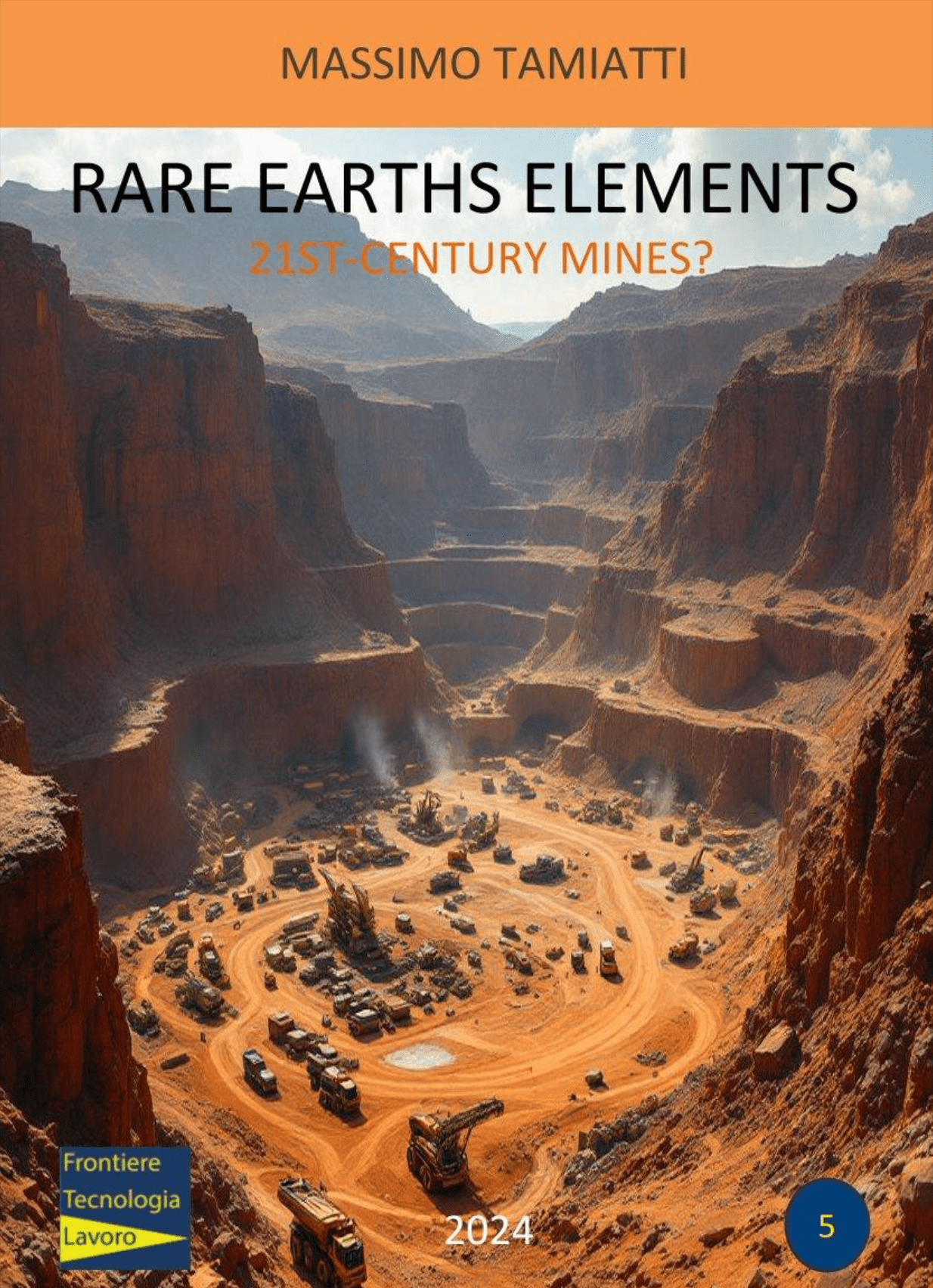
The “Rare Earths of the 21st Century?” report examines the strategic importance of the 17 rare earth elements for the global economy and ecological transition, underlining both their geological abundance and the extraction and environmental challenges posed by their dispersion and the complex processing needed to reach the high purity levels required by modern technologies.
Chinese Monopoly and Strategic Vulnerability
China today accounts for roughly 60 % of global rare earth raw‐material production and over 90 % of magnet manufacturing, controlling not only extraction but also refining and intermediate manufacturing stages. This concentration leaves Europe and the United States exposed to significant geopolitical risks, especially in critical sectors such as defense, renewable energy, and high‐tech industries.
European Union Response
To curb external dependence, the EU’s 2024 Critical Raw Materials Regulation sets ambitious targets: meet 10 % of demand through extraction within the EU, 15 % through recycling, and 40 % via internal processing. Newly discovered deposits in Sweden and other Nordic countries offer promising opportunities, though the timeline for bringing these resources online remains uncertain.
Opportunities and Challenges for Italy
Italy hosts about 3,000 surveyed deposits—roughly 1,000 of them metalliferous—left idle since the 1960s and ’70s. Restarting extraction will demand modern technologies and strict environmental safeguards. At the same time, WEEE (Waste Electrical and Electronic Equipment) recycling, or “urban mining,” is seen as a valuable alternative source, often yielding higher concentrations of critical metals than conventional deposits.
Key Professional Profiles
- Geologists and Mining Engineers: Essential for designing extraction projects, managing sites, and planning environmental restoration. In Italy, however, training is scarce: only the Polytechnic of Turin still offers dedicated mining‐engineering courses.
- Operational Technicians: Miners, quarry workers, mineral chemists, and explosives specialists who must adapt to advanced safety protocols and complex processing operations.
- Logistics and Plant Operators: Responsible for the safe transport of hazardous materials and the day-to-day running of treatment facilities.
- Urban Mining Specialists: Experts in recovering precious metals from electronic waste, combining waste‐management know-how with advanced material‐recovery technologies.
Ethical and Sustainability Considerations
Extraction in developing regions is often linked to worker exploitation and severe environmental degradation. Building European and Italian supply chains not only strengthens economic security but also upholds labor rights, reduces ecological impact, and promotes environmental justice.
Conclusions and Outlook
Reliance on external markets, coupled with technical, economic, and environmental hurdles, renders rare earths a strategic vulnerability for Europe. Strengthening domestic capabilities in extraction, processing, and recycling—alongside the education of specialized professionals—is essential to guarantee supply security, promote sustainability, and achieve technological independence. Only through an integrated approach that marries innovation, ethical standards, and long-term planning can Europe and Italy turn this challenge into a competitive advantage.